
Powerful Reasons Developers Prefer Structural Steel Solutions
Home » Powerful Reasons Developers Prefer Structural Steel Solutions
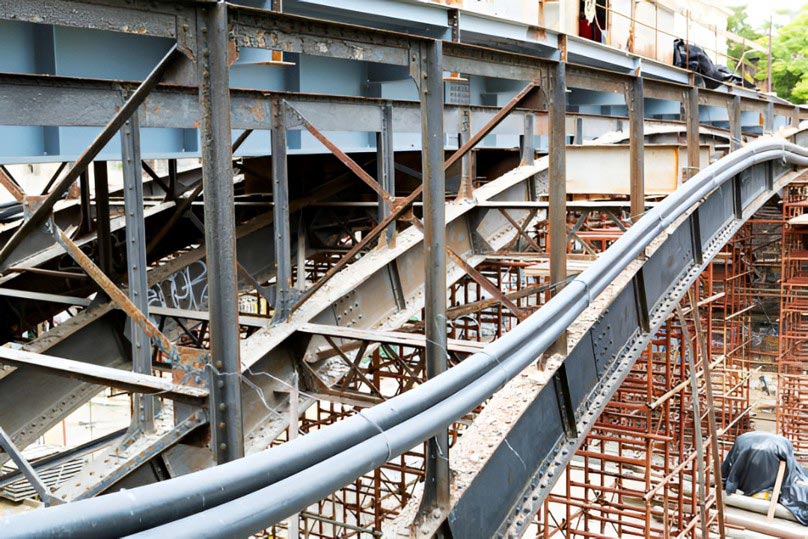
When developers weigh up their structural options, structural steel consistently comes out on top. Speed, design freedom, cost efficiency, and long-term sustainability are not just talking points. They are measurable project advantages that translate directly into stronger returns. At Steelrise Australia, we work with developers across commercial, industrial, and large-scale residential projects who choose steel for all the right reasons.
Table of Contents
ToggleKey Takeaways
- Speed of delivery: Prefabricated steel components are manufactured off-site, reducing construction timelines significantly versus other materials.
- Design flexibility: Steel enables large clear spans and adaptable floor plates that suit commercial and mixed-use developments.
- Sustainability credentials: Australia recovers approximately 90% of all metals for recycling, making steel one of the most circular materials available.
- Structural performance: Steel is non-combustible and, when properly designed, retains structural integrity under fire conditions for extended periods.
- Compliance confidence: Steel fabricated to AS/NZS 5131 and AS 4100 delivers verifiable, certifiable structural outcomes on every project.
Australia’s Construction Demand Puts Steel at Centre Stage
Australia’s development pipeline is enormous and growing. According to Infrastructure Australia’s 2025 Market Capacity Report, an estimated 26.6 million tonnes of structural steel is required to support Australia’s infrastructure and construction programme over the five years from 2024 to 2029. That figure reflects the scale of demand developers are working within, and structural steel sits at the centre of it.
Mid-rise construction in Australia, spanning two storeys up to seven or eight storeys, is an area of immense growth. As the Australian Steel Institute notes on steel in buildings, more than half of the steel produced worldwide goes into steel buildings and infrastructure. Choosing steel from the outset provides maximum benefits, including savings in construction schedule, on-site labour, and logistics.
Reason 1: Steel Dramatically Compresses Construction Timelines
Time is a developer’s most valuable asset. Every week a project sits on site without progress adds holding costs, delays revenue, and creates risk. Structural steel directly addresses this by shifting the bulk of manufacturing off-site, where factory conditions allow for precision production independent of weather, trade availability, and site access constraints.
Volumetric steel structures improve productivity, cost-effectiveness, and execution speed, noting that off-site prefabrication reduces labour requirements and enables quicker project completion.
The Urban Developer has reported on Australia’s evolving prefab and modular construction sector, noting that new methods and policies are removing handbrakes that previously slowed adoption. Steel is central to these modern methods of construction, offering developers a pathway to faster, more predictable programme delivery.
Speed advantages steel delivers on site:
- Components arrive on site fabricated, cut, and ready for installation
- Erection sequences are pre-planned and coordinated before a single lift begins
- Multiple construction activities can proceed in parallel, unlike wet trade-dependent programmes
- Shorter on-site periods mean reduced exposure to weather delays and labour volatility
Reason 2: Steel Gives Developers Unmatched Design Freedom
Developers do not just build structures. They build products that need to attract tenants, buyers, and investors. Structural steel provides the design flexibility that makes compelling commercial, retail, and residential products possible.
Steel’s ability to achieve large clear spans without intermediate columns is one of its most commercially valuable characteristics. The large-span steel structures, confirming their efficiency and suitability for wide-ranging applications from offices to stadiums, warehouses, and mixed-use facilities where open, adaptable floor plates are commercially essential.
Design benefits that drive developer preference:
- Column-Free Floor Plates: Tenants and end users benefit from maximum flexibility in configuring internal spaces.
- Longer Spans: Retail environments, open-plan offices, and industrial facilities can all be accommodated within a single steel frame without compromise.
- Architectural Expression: Exposed structural steel offers a considered aesthetic that resonates in contemporary commercial and mixed-use environments.
- Adaptability: Steel structures can be modified, extended, or reconfigured more readily than concrete alternatives, protecting the long-term value of the asset.
This combination of structural performance and architectural potential is why so many high-profile commercial developments across Sydney and major Australian cities rely on structural steel as their primary system. Our range of structural steel services at Steelrise Australia supports developers from the 3D modelling and shop drawing stage through to installation and final certification.
Reason 3: Structural Steel Supports Sustainability Goals
Environmental credentials are no longer a secondary concern for Australian developers. Green Star ratings, embodied carbon reporting, and sustainability benchmarks directly influence tenant attraction, asset valuation, and project approval in many jurisdictions. Structural steel aligns naturally with these goals.
Australia’s metal recovery data is compelling. According to data from the National Waste and Resource Recovery Database, reported by Waste Management Review, metals achieved an 89.9% recovery rate in 2022 to 2023, making them the most successfully recovered material category nationally. The Australian Steel Institute confirms that steel can be recycled without degradation in performance, making it intrinsically sustainable over its full lifecycle.
Architecture Australia has also highlighted the construction sector’s significant role in material consumption and waste, noting that the built environment accounts for roughly one-third of all resource consumption in Australia. Selecting a material with a 90% recovery rate and the capacity for reuse and deconstruction directly addresses this challenge for developers who are serious about sustainability outcomes.
Key sustainability advantages of structural steel for Australian developers:
- High Recycled Content: Electric arc furnace steelmaking uses up to 85% or more post-consumer scrap, significantly reducing embodied carbon.
- Design for Deconstruction: Bolted structural steel connections can be disassembled and the components reused in future projects.
- Green Star Alignment: Steel’s recyclability and verifiable material credentials support the documentation requirements for formal rating schemes.
- Reduced Site Waste: Off-site fabrication minimises material offcuts and on-site waste generation compared with wet trade construction methods.
Reason 4: Steel Delivers Verified Structural and Fire Performance
Developers carry long-term liability for the buildings they bring to market. Structural steel, designed and manufactured to Australian Standards, provides the certifiable performance credentials that protect developers, their financiers, and their end users.
On fire performance, the Australian Steel Institute’s guidance on fire safety confirms that steel is a durable, non-combustible material. When properly designed and constructed, a structural steel frame can retain its structural integrity for an extended period under fire and prolonged elevated temperatures. The ASI notes that steel is one of the most comprehensively fire-tested structural framing materials, with over a hundred individual fire tests carried out by the steel construction sector internationally in the past 30 years.
For developers, this means a structural system that not only meets the fire resistance level (FRL) requirements of the National Construction Code but does so with the backing of decades of testing data, traceable compliance documentation, and engineering certifications that satisfy insurers, certifiers, and approval bodies.
Structural performance advantages that matter to developers:
- Manufacturing to AS/NZS 5131 ensures fabrication quality is verifiable and independently certified
- Design to AS 4100 provides the structural compliance pathway required by the National Construction Code
- Third-party certification through the National Structural Steelwork Compliance Scheme (NSSCS) provides additional protection
- Fire performance can be optimised through intumescent coatings, concrete-filled tubular members, and fire-engineered design solutions
Reason 5: Steel Protects Project Economics in a Challenging Market
Australian construction costs have been under pressure. As Architecture and Design has reported on construction cost outlooks, material prices, labour shortages, and escalating costs are reshaping how developers assess their structural system choices. Structural steel, particularly when coupled with prefabricated manufacturing, offers developers meaningful cost advantages across the project lifecycle.
Where steel protects developer economics:
- Shorter Programme: Faster construction means earlier completion, earlier revenue, and lower holding costs.
- Reduced On-Site Labour: Prefabricated steel components require fewer trades on site for a shorter duration.
- Predictable Cost Model: Off-site manufacturing locks in a significant portion of the structural package cost before site conditions can introduce variations.
- Lower Long-Term Maintenance: Properly treated structural steel has a long service life with minimal maintenance requirements under normal operating conditions.
The material quality affects project economics, influencing cost efficiency, durability, and long-term performance within broader steel demand trends in 2026.
Conclusion
Speed, design flexibility, sustainability, structural performance, and commercial confidence. These are the reasons developers across Australia continue to choose structural steel for their most important projects. Get in touch with our team today, if you are planning a commercial, industrial, or large-scale residential development and want to understand how Steelrise Australia can support your programme.
FAQs:
Why do developers prefer structural steel over concrete?
Steel offers faster construction, greater design flexibility, lower on-site labour requirements, and strong long-term sustainability credentials.
Is structural steel more expensive than concrete for large developments?
Steel’s faster construction timelines and reduced on-site labour often offset higher material costs, making it cost-competitive overall.
What Australian standards apply to structural steel in commercial buildings?
AS/NZS 5131 covers fabrication and erection, while AS 4100 governs structural steel design under the National Construction Code.
Is structural steel sustainable for green-rated developments in Australia?
Yes. Steel has an approximately 90% metal recovery rate in Australia and supports Green Star rating documentation requirements.
Can structural steel meet fire resistance requirements in Australian buildings?
Yes. Properly designed structural steel frames can achieve required Fire Resistance Levels as specified in the National Construction Code.
How does prefabricated steel reduce construction time for developers?
Factory fabrication proceeds in parallel with site preparation, so erection begins immediately once the site is ready for installation.

SteelRise Australia delivers high-quality structural steel solutions built for strength, safety, and long-lasting performance.
Quick Links
Our Company
- Office Hours: 8am- 5pm
- info@steelriseaus.com
- 1300 901 701
-
Head Office:
1/16 Bernera Road, Prestons NSW 2170