
Critical Structural Steel Mistakes That Can Delay Major Projects
Home » Critical Structural Steel Mistakes That Can Delay Major Projects
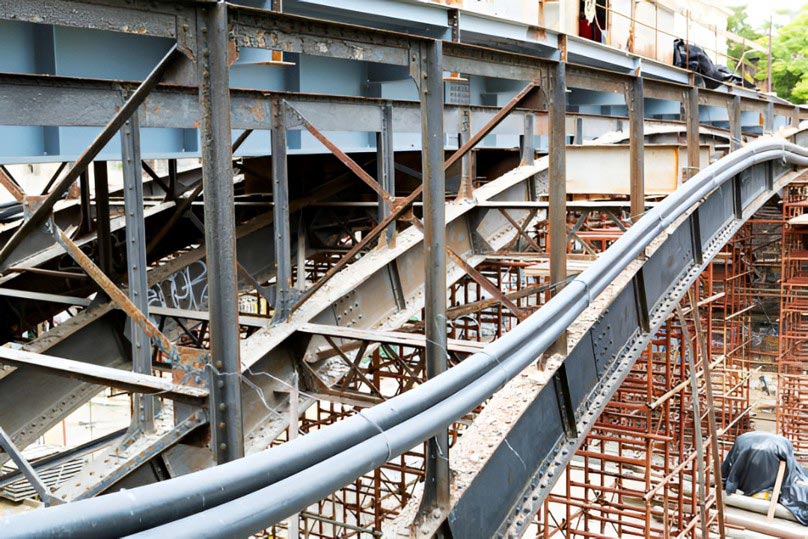
Structural steel mistakes rarely announce themselves. They show up as rework orders, hold points, budget blowouts, and programme resets that nobody saw coming. At Steelrise Australia, we have seen first-hand how avoidable errors in the early stages of steel fabrication and erection snowball into serious project delays. Understanding these mistakes is the first step toward protecting your project timeline.
Table of Contents
ToggleKey Takeaways
- Design errors compound: Mistakes in drawings and specifications cause rework that cascades across every downstream trade.
- Non-conforming steel is a significant threat: An AiG survey found 95% of respondents in the steel sector have encountered non-conforming product in their supply chain.
- Poor surface treatment costs time: Incorrect corrosion protection triggers costly rectification and fails NCC compliance assessments.
- Erection sequencing matters: Installing members out of order creates instability risks and leads to immediate programme delays.
- Communication gaps are project killers: Breakdowns between fabricators, engineers, and site teams account for a significant proportion of avoidable rework.
Why Structural Steel Mistakes Have Such a Big Impact in Australia
Australia’s construction pipeline is substantial. Structural steel strength & durability underpins this scale. According to Infrastructure Australia’s 2025 Market Capacity Report, an estimated 26.6 million tonnes of structural steel is needed to deliver the country’s infrastructure pipeline over the five years from 2024 to 2029. That scale means even small, systemic errors in steel fabrication and erection can have national consequences for project schedules and costs.
The stakes are elevated by tight labour markets, subcontracting chains, and the growing volume of imported steel products that may not meet Australian compliance standards. As API Magazine reports, the sector is navigating labour shortages, insolvency pressures, and cost volatility all at once. In this environment, steel-related mistakes hit harder and recover slower than they would in a more stable market.
Mistake 1: Errors in Design Drawings and Shop Documentation
The most avoidable and yet most persistent source of structural steel delays is inaccurate or incomplete documentation before a single member is cut. When drawings contain dimensional errors, missing connection details, or specification gaps, fabrication teams manufacture components to the wrong standard.
The Australian Steel Institute makes it clear that AS/NZS 5131 requires fabricators and engineers to work from documentation that is fully coordinated and project-specific. When that documentation is rushed or poorly reviewed, the result is expensive rework and on-site remediation that disrupts multiple trade sequences.
Common drawing-related mistakes include:
- Structural vs Architectural Drawing Inconsistencies: Members are fabricated to one set of dims and cannot be installed per the other.
- Missing Weld Specifications: Welders proceed without clear guidance, and inspections fail as a result.
- Inadequate Connection Detailing: Bolt groups, plate sizes, and stiffener requirements are unclear, leading to interpretation errors.
- Uncontrolled Late Design Changes: Updated drawings reach site inconsistently, and crews work from superseded documents.
Investing in thorough 3D modelling and shop drawing reviews before procurement begins eliminates the majority of these issues before they reach the shop floor.
Mistake 2: Using Non-Conforming Steel Materials
One of the most alarming issues facing the Australian structural steel industry is the prevalence of non-conforming product. The Australian Steel Institute’s quality and compliance guidance cites a survey by the Australian Industry Group (AiG) in which 95% of respondents in the steel product sector reported encountering non-conforming product in their supply chain. The consequences range from schedule overruns to complete re-fabrication of imported components.
Under the National Construction Code, structural steel must comply with AS/NZS 5131 and the relevant material standards. When steel does not meet these requirements, the project team is forced into a Performance Solution pathway, which triggers additional engineering assessments, extended approval timelines, and significant cost impacts.
What to look for before accepting steel on site:
- Request and verify mill test reports against the specification grade before fabrication begins
- Confirm that certifications meet AS/NZS 3678 or AS/NZS 3679 as relevant
- Use only fabricators certified under the National Structural Steelwork Compliance Scheme (NSSCS) where possible
- Document and reject any materials where certification is absent or incomplete
Mistake 3: Inadequate Surface Treatment and Corrosion Protection
Corrosion protection errors are a frequent but underappreciated cause of project delays in structural steel construction. When surface preparation is inconsistent, coating thicknesses are not verified, or the wrong system is selected for the site environment, structures fail inspection or deteriorate faster than specified.
The Building Code of Australia updated its corrosion protection requirements for structural steel, with new provisions coming into effect in May 2024. As outlined by the Galvanizers Association of Australia, all structural steel elements must now meet a minimum design life of 15 years, with galvanising classifications ranging from Low to Very High based on environmental exposure. Projects that do not comply with these updated standards face certification delays.
Typical corrosion protection mistakes that delay projects:
- Incorrect Paint System Selection: Coastal or industrial zones require specific coating grades that standard systems cannot meet.
- Poor Surface Preparation Before Coating: Contamination or inadequate blast profile prevents adhesion, causing early coating failure.
- Reduced Cure Times Due to Schedule Pressure: Coatings are damaged during transport because they have not fully cured before dispatch.
- Missing Documentation: Coating thickness records and inspection reports are absent, blocking certification sign-off.
Mistake 4: Poor Erection Sequencing and Site Planning
Steel erection is classified as high risk construction work under Australian WHS regulations. According to Safe Work Australia’s steel erection information sheet, erectors must prepare a detailed method of erection aligned with the drawings, including a site plan covering crane coverage, unloading points, storage areas, and access routes. When this planning is inadequate or ignored, the consequences are immediate and expensive.
Erection sequencing mistakes that commonly delay projects:
- Installing Members Out of Sequence: This creates temporary stability problems and forces costly re-sequencing under live programme pressure.
- Crane Capacity Not Verified for Maximum Lift: Undersized crane selection causes programme hold points and mobilisation delays for additional plant.
- Unverified Anchor Bolt Locations: Misplaced cast-in anchors cannot be adjusted without structural engineer review and approval.
- Incorrect Temporary Bracing Installation: Partially erected structures are unstable, and WorkSafe Victoria has recorded structural collapses where bracing protocols were not followed.
The Australian Steel Institute’s practical guidance on planning the safe erection of steel structures highlights that communication between all stakeholders at every stage, including designers, fabricators, and erectors, is critical. When this communication breaks down, hold points multiply and programme dates slip.
Structural steel services at Steelrise Australia, ensuring that erection sequencing is planned and coordinated from the outset.
Mistake 5: Inadequate Quality Assurance and Inspection
Quality assurance is not a post-fabrication formality. It is an active process that must be embedded at every stage, from material procurement through to final certification. When inspections are infrequent, undocumented, or delegated to unqualified personnel, defects pass through the supply chain undetected until they surface on site.
Research on human errors in the design and execution of steel structures confirms that construction engineering decisions involve a large number of risk factors. Without structured quality management, these risks compound across the project lifecycle, often crystallising as costly on-site defects that could have been caught and corrected during fabrication.
What a robust QA process looks like in structural steel:
- Independent third-party inspections at key fabrication hold points
- Full weld inspection records maintained by certified welding inspectors
- Dimensional checks against shop drawings before components are dispatched
- Receipt inspection on site to confirm components arrive undamaged and correctly identified
- Non-destructive testing (NDT) applied to critical weld categories as specified
Structural outcomes are directly tied to the quality of engineering decisions and inspection rigour applied throughout construction. Australia’s national standards exist to formalise this rigour, but they only protect the project when they are actively and consistently applied.
Mistake 6: Communication Breakdowns Across the Supply Chain
Even technically sound fabrication can be undone by poor communication between the parties involved in a structural steel project. When engineers, fabricators, logistics teams, and site crews operate in silos, version control fails, substitutions go unreviewed, and incompatible components arrive on site.
According to industry reporting by Architecture and Design, the broader construction sector is under significant financial and operational pressure. In that environment, breakdowns in communication become even more likely as teams are stretched thin and documentation practices are deprioritised.
Structural steel communication mistakes that delay projects include:
- Undocumented Verbal Design Changes: Site teams proceed on the basis of conversations that were never formally issued.
- Uncommunicated Installation Sequence: Components arrive in the wrong order, creating storage and sequencing problems on a constrained site.
- Incomplete Requests for Information (RFIs): Ambiguities are resolved informally and inconsistently across different crew members.
- No Fab–Erection Handover: Critical information about as-fabricated dimensions or substitutions is not passed through the chain.
For further reading on how effective planning prevents structural steel delays, see our blog post on how premium steel materials drive faster and more profitable builds.
Conclusion
Every one of the mistakes outlined above is preventable with the right planning, the right team, and the right systems in place. If your project involves structural steel and you want to avoid the delays that undermine so many builds across Australia, get in touch with us. Our experienced team manages every stage from fabrication to site certification, so your programme stays on track.
FAQs:
What are the most common causes of structural steel delays on construction projects?
Design documentation errors, non-conforming materials, poor QA, and erection sequencing failures are the leading causes.
How does non-conforming steel affect a project timeline?
Non-conforming steel triggers re-fabrication, engineering reviews, and re-certification, adding weeks or months to the programme.
What Australian standards apply to structural steel fabrication?
AS/NZS 5131, AS 4100, and AS/NZS 1554.1 are the primary standards governing fabrication, design, and welding in Australia.
Why is erection sequencing important in structural steel projects?
Incorrect sequencing creates structural instability and forces costly re-sequencing under live programme and safety constraints.
What happens if corrosion protection does not meet NCC requirements?
Non-compliant corrosion protection blocks final certification and requires costly rectification before the project can proceed.
How can communication breakdowns be prevented in a structural steel project?
Formal RFI processes, documented revision control, and structured hand-over protocols between all parties prevent breakdowns.

SteelRise Australia delivers high-quality structural steel solutions built for strength, safety, and long-lasting performance.
Quick Links
Our Company
- Office Hours: 8am- 5pm
- info@steelriseaus.com
- 1300 901 701
-
Head Office:
1/16 Bernera Road, Prestons NSW 2170